Essence/Condensed Message of Stoicism
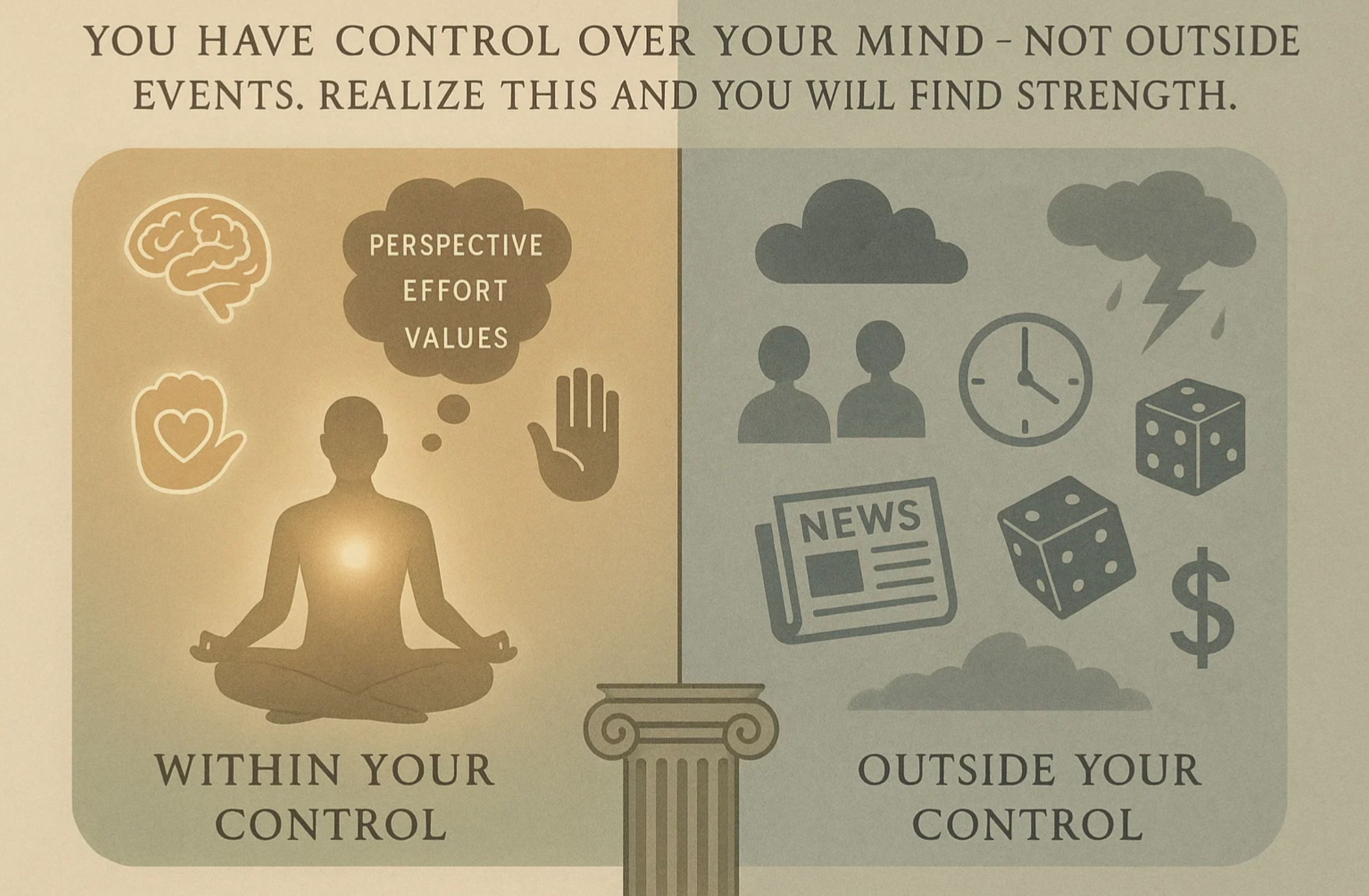
To separate in our minds what is within our control and what is not. Focusing on what is within our control and accepting what is not, thereby cultivating inner tranquility.
Stoicism emphasizes the importance of personal virtue, emotional resilience, and understanding the nature of the world through reason, all as means to achieve a content and fulfilled life.
We Control Our Mind Not Outside Events
“You have control over your mind and not outside events, Realize this and you will find strength.” - Marcus-Aurelius
Link to originalWe don’t control what happens to us, but we do control how we react to it. - Ryan-Holiday
Epictetus starts Enchiridion by stating what we control and what we don't
Epictetus starts his The-Manual-Enchiridion book by
Some things we can control, some we can’t. … What we can control naturally is not governed, restricted or constrained by others; what we can’t control is naturally governed, restricted and constrained by others. - The-Manual-Enchiridion
Link to originalHappiness is to not be dependant on externals
The essence of philosophy is to not depend on external things for happiness
Link to originalThe essence of philosophy is that a man should so live that his happiness shall depend as little as possible on external things. - audio/Epictetus
There is only one way to happiness
Link to originalThere is only one way to happiness and that is to cease worrying about things which are beyond the power of our will. - Epictetus
Relationships
- influenced-by:cynicism
- influenced-by:Socrates
- influenced-by:Plato
- influenced-by:Aristotle
- influenced-by:Heraclitus
Virtue is Key.
virtue
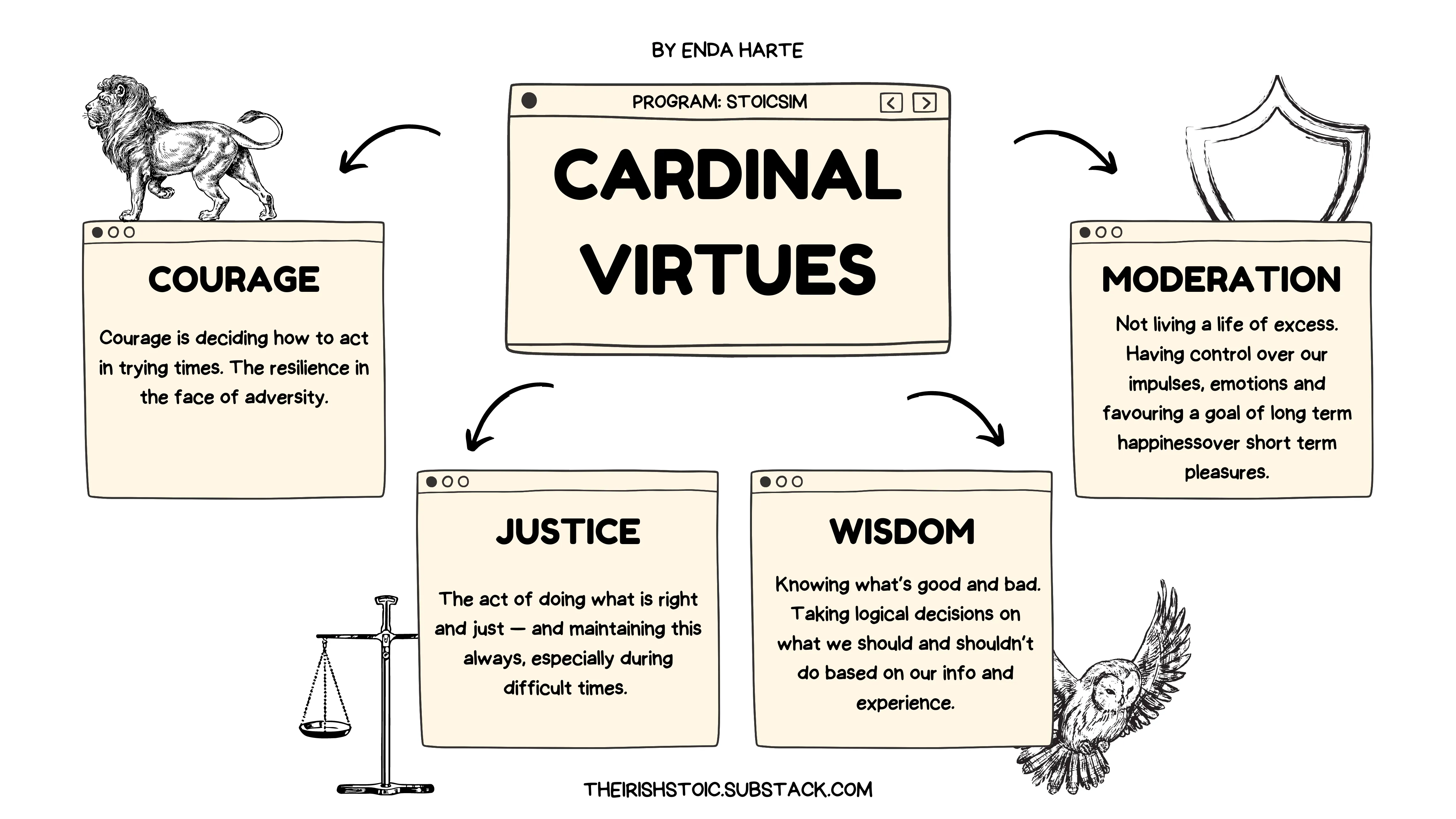
Stoics categorize virtue into four cardinal virtues:
Wisdom
Wisdom (Sophia): This is the knowledge of what is good, what is evil, and what is neither (indifferents). Wisdom encompasses both practical wisdom (phronesis), which is the ability to navigate complex situations and make morally sound decisions, and theoretical wisdom, which involves understanding the nature of the universe and human behavior.
Link to original
- Related: truth
Courage
Courage (Andreia): In Stoicism, courage is not just physical bravery but also the moral courage to face and accept the truth, regardless of the personal cost. It includes enduring pain and hardship with resilience and integrity, and standing up for what is right.
Link to originalJustice (Virtue)
Justice (Dikaiosyne): This virtue involves dealing fairly and appropriately with others, respecting their rights, and performing one’s duties in relationships, society and family. It extends to all forms of interaction, promoting social harmony and cooperation.
Link to originalTemperance
Temperance (Sophrosyne): Temperance is the self-control and moderation in all aspects of life. It means having command over one’s desires and impulses, ensuring they are in line with reason. This virtue helps an individual avoid excess and make balanced choices.
Link to originalStoics believe that these virtues are interdependent and interconnected; possessing one entails possessing all, as they are expressions of a single rational and social spirit. Virtue, for Stoics, is both the means to live in accordance with nature and the definition of a good life itself.
Link to original